


Finding the right podcast microphone is essential to producing high-quality audio for your listeners. Whether you’re just starting or looking for a professional upgrade, we’ve compiled a list of the best podcast microphones for different budgets and use cases. From affordable USB mics to high-end XLR options, this guide will help you make an informed decision.
Understanding Microphone Types and Polar Patterns
Before choosing a podcast microphone, it’s important to understand two key aspects: condenser vs. dynamic microphones and polar patterns. These factors greatly impact your recording quality and microphone choice.
Condenser vs. Dynamic Microphones
Dynamic Microphones
Dynamic podcast microphones are widely used in podcasting due to their durability and excellent background noise rejection. These microphones use a moving coil to convert sound waves into an electrical signal, making them less sensitive to ambient noise. This makes them ideal for podcasters who record in untreated rooms or home studios where external noise could be an issue.
Pros:
- Excellent noise rejection
- Durable and long-lasting
- Doesn’t require external power (phantom power)
- Great for untreated rooms and live recordings
Cons:
- Less sensitivity to subtle sounds
- Requires more gain from an audio interface
Condenser Microphones
Condenser podcast microphones are more sensitive and capture more detail, making them a favorite among voice-over artists and studio podcasters. They work by using a thin diaphragm and require phantom power (48V) to operate. However, their sensitivity makes them prone to picking up background noise, so they’re best suited for controlled studio environments.
Pros:
- Highly detailed sound quality
- Wide frequency response
- Great for capturing subtle vocal nuances
Cons:
- More sensitive to background noise
- Requires phantom power (48V)
- More fragile than dynamic microphones
Polar Patterns and Why They Matter
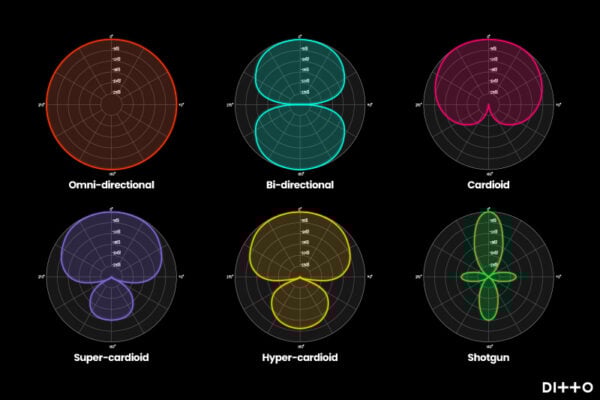
A podcast microphone’s polar pattern determines how it picks up sound from different directions. The three most common patterns for podcasting are:
Cardioid
Cardioid podcast microphones pick up sound primarily from the front, reducing background noise from the sides and rear. This makes them the most popular choice for podcasters since they focus on capturing the speaker’s voice while minimizing room noise.
Best for: Solo podcasters, interviews, home studios
Omnidirectional
Omnidirectional podcast microphones capture sound from all directions, which can be beneficial in specific scenarios but problematic in untreated spaces. They are great for capturing group discussions where multiple speakers are involved, but they may pick up unwanted background noise.
Best for: Roundtable discussions, multi-person setups
Bidirectional (Figure-8)
Bidirectional podcast microphones capture sound from the front and back while rejecting noise from the sides. This pattern is useful for in-person interviews with two speakers sharing a microphone.
Best for: Face-to-face interviews, two-person recordings
Understanding these podcast microphone characteristics will help you choose the right podcast microphone for your needs. Now, let’s dive into the best microphones for every budget.
Best Budget Podcast Microphones (Under $100)
1. Audio-Technica ATR2100x-USB ($79)
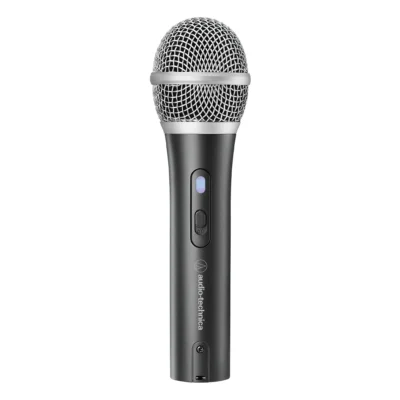
- Type: Dynamic
- Connection: USB & XLR
- Best for: Beginners, remote podcasters
- Why Choose It? A versatile and budget-friendly podcast microphone that offers both USB and XLR connectivity, making it ideal for new podcasters looking for flexibility.
- Buy Here
2. Samson Q2U ($69)
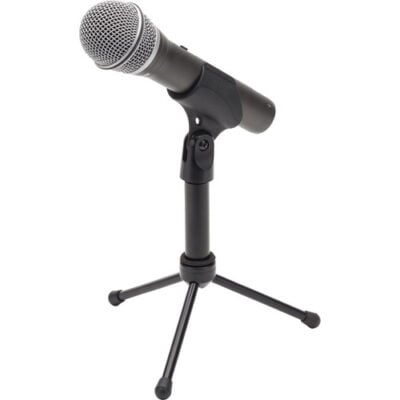
- Type: Dynamic
- Connection: USB & XLR
- Best for: Budget-conscious podcasters
- Why Choose It? Great sound quality for the price and easy plug-and-play setup for USB users.
- Buy Here
Best Mid-Range Podcast Microphones ($100 – $250)
3. Shure MV7 ($249)
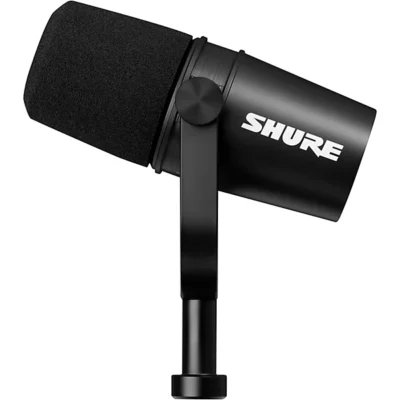
- Type: Dynamic
- Connection: USB & XLR
- Best for: Intermediate podcasters, solo hosts
- Why Choose It? Inspired by the legendary SM7B, the MV7 delivers pro-level sound with the convenience of USB or XLR.
- Buy Here
4. Rode PodMic ($99)
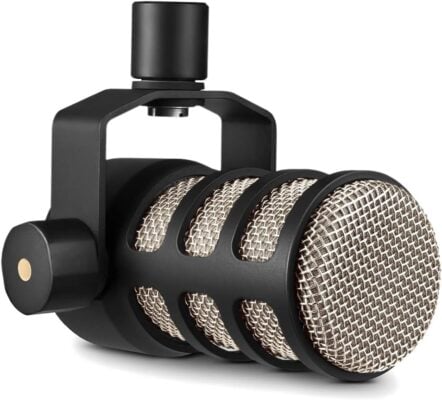
- Type: Dynamic
- Connection: XLR
- Best for: Budget-conscious podcasters upgrading to XLR
- Why Choose It? Great sound quality and durability at an affordable price, perfect for studio setups.
- Buy Here
Best High-End Podcast Microphones ($250 and Up)
5. Shure SM7B ($399)
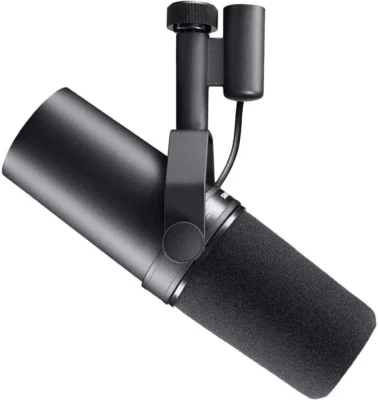
- Type: Dynamic
- Connection: XLR
- Best for: Professional podcasters, broadcasters
- Why Choose It? The gold standard for podcasting, used by industry professionals for its broadcast-quality sound and noise rejection.
- Buy Here
6. Electro-Voice RE20 ($449)
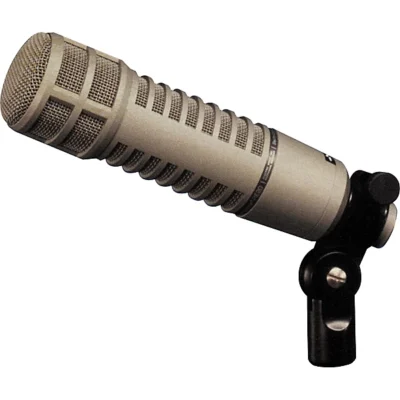
- Type: Dynamic
- Connection: XLR
- Best for: Professional studios
- Why Choose It? Offers smooth, consistent sound with minimal proximity effect, making it ideal for serious podcasters.
- Buy Here
Which Microphones Do Popular Podcasts Use?
The Joe Rogan Experience – Shure SM7B
Joe Rogan’s podcast uses the Shure SM7B, known for its broadcast-quality sound and excellent background noise rejection. Visit Podcast
SmartLess – Electro-Voice RE20
Hosted by Jason Bateman, Will Arnett, and Sean Hayes, SmartLess relies on the Electro-Voice RE20 for its warm and consistent vocal quality. Visit Podcast
The Daily (New York Times) – Neumann U87
The Daily uses the Neumann U87, a high-end condenser podcast microphone that captures incredible vocal clarity. Visit Podcast
Need Help Setting Up Your Podcast?
Selecting the right podcast microphone is just the beginning. If you need assistance with recording, editing, distribution, or launching your podcast, we can help!
💡 Set up a free discovery call today: iamhellostudios.com/discovery-call
Let’s get your podcast microphone setup sounding professional and ready for the world! 🎙️