Key Takeaways
Pick solo for control and speed, co-hosted for energy and shared workload, or interview for reach and relationships. Solo trades coordination for preparation; interviews trade preparation for coordination. Choose the format you can sustain for 50 episodes, not the one that sounds best for the first three.
Most new podcasters pick their format by accident. They invite a friend on for episode one, it goes fine, and suddenly they've committed to a co-hosted show for the next two years, including the weeks when that friend is on vacation, busy, or quietly done with the whole thing.
Format is the single most consequential decision you make before you hit record. It determines how long each episode takes to produce, whether you can publish on a schedule, how your show grows, and honestly whether you're still podcasting a year from now. Here's how to choose deliberately.
The three formats, honestly compared
Solo
You, a microphone, and a topic.
Best for: experts, coaches, consultants, and anyone building authority around their own name.
What it gives you: total control. No scheduling, no cancellations, no waiting on someone else's calendar. You can batch-record five episodes on a Tuesday morning and be a month ahead. Your voice becomes the brand, which is exactly what you want if the podcast exists to drive leads to you.
What it costs you: solo is the hardest format to make sound good. There's no one to react to, no natural back-and-forth, and dead air is entirely your problem. It also requires real preparation, you can't lean on a guest to fill twenty minutes. Many people find it lonely, and loneliness is a leading cause of podcast abandonment.
Sustainable if: you're comfortable with an outline, you enjoy teaching, and you'd rather prep than coordinate.
Co-hosted
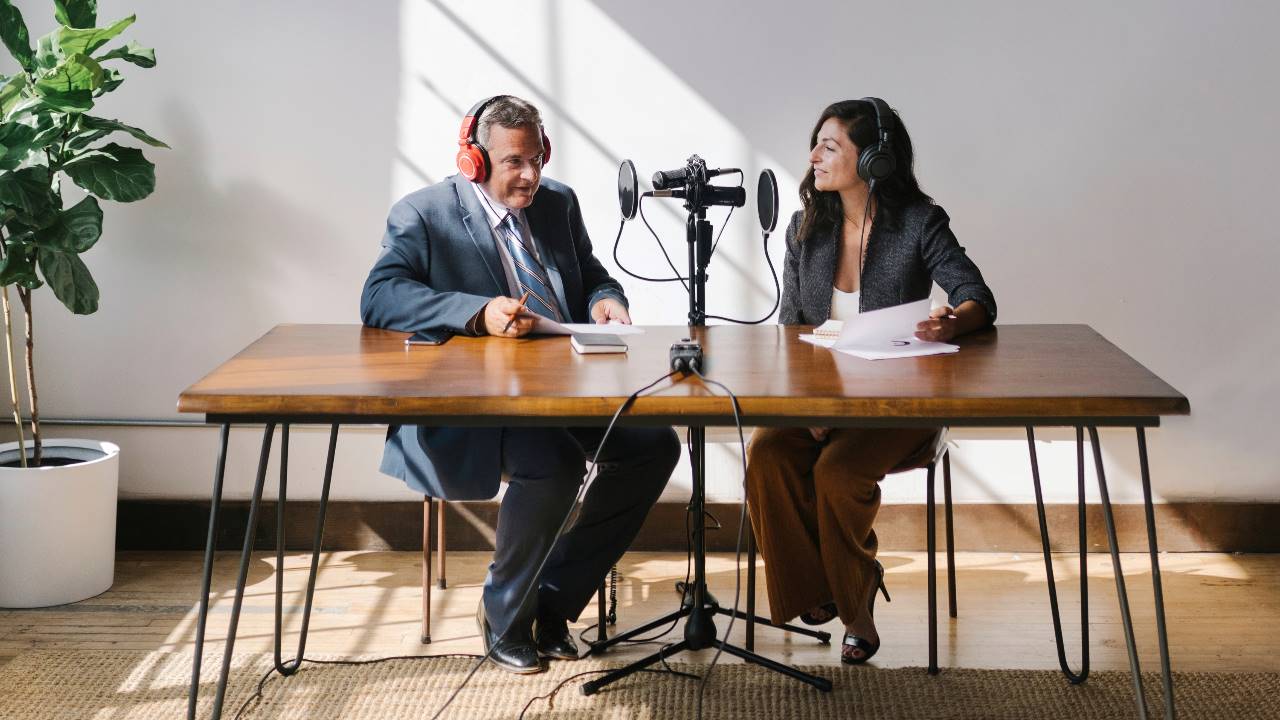
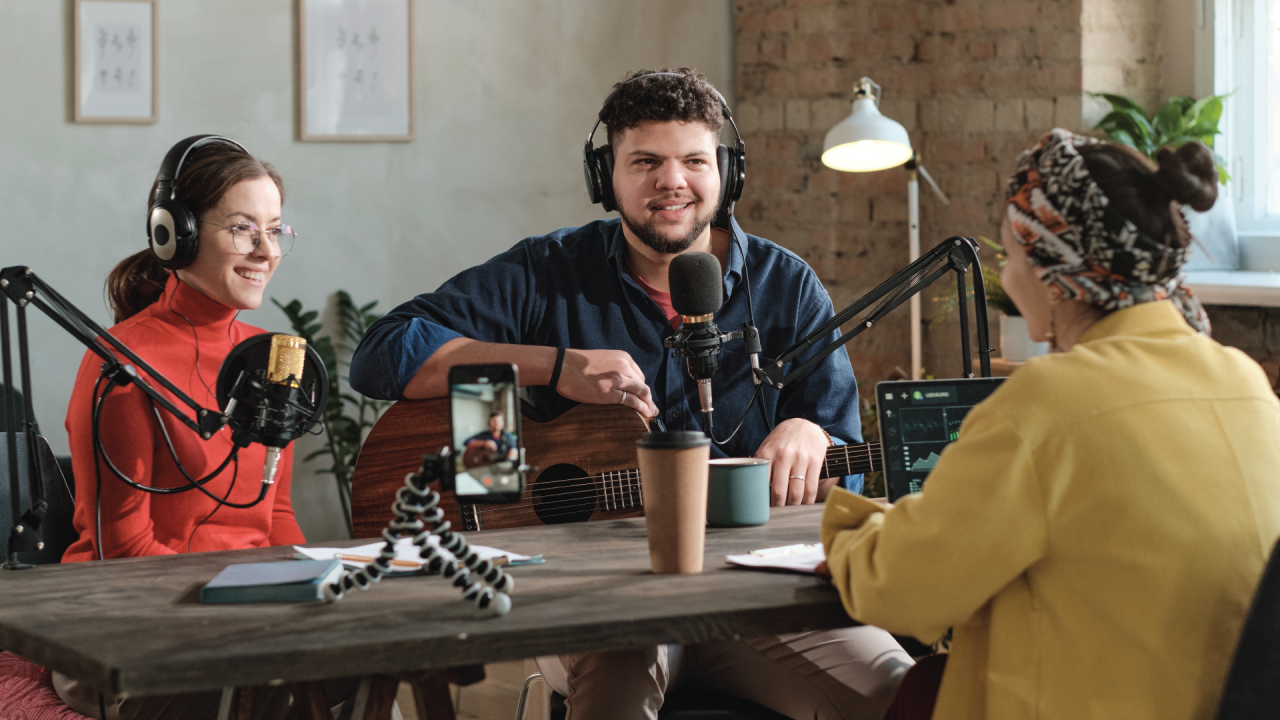
Two (occasionally three) regular hosts.
Best for: conversational shows, comedy, commentary, business partners, and anyone who thinks better out loud.
What it gives you: energy. Chemistry between hosts is the most listenable thing in podcasting, and it's very hard to fake or manufacture later. Prep is lighter because conversation fills gaps naturally. You split the workload, and you have someone holding you accountable to the schedule.
What it costs you: you now have two calendars, two moods, and two levels of commitment. Co-hosted shows die when one host loses interest, and one of them usually does. Editing is also harder: crosstalk, uneven mic levels, and two audio tracks to balance.
Sustainable if: you genuinely like talking to this person, you've had a direct conversation about commitment and what happens if someone wants out, and you can agree on a recording day and protect it.
Interview
A rotating guest each episode.
Best for: B2B shows, networking-driven businesses, niche industries, and anyone who wants to build relationships as much as an audience.
What it gives you: built-in credibility and reach. Every guest is a potential promoter, and interviews are an unmatched excuse to get in a room with people you want to know. Content is easier — your guest brings the substance.
What it costs you: an interview show is really a booking operation with a microphone attached. Outreach, scheduling, rescheduling, pre-calls, tech issues on their end, follow-ups. Guest quality varies wildly, and one bad guest can produce an unusable episode. There's also an audience risk: if listeners come for the guests, you don't have a show — you have a series of unrelated episodes.
Sustainable if: you have a pipeline of guests, a repeatable booking process, and a point of view strong enough that the show works even when the guest is only okay.
A faster way to decide: answer these five questions
1. What's the goal of this show?
Building your personal authority points to solo. Building relationships and a pipeline points to interviews. Building an audience around a vibe or a topic points to co-hosted.
2. What can you actually sustain for 50 episodes?
Not for three. Fifty. Whichever format survives that question is your format.
3. How much do you like preparing versus coordinating?
Solo trades coordination for preparation. Interviews trade preparation for coordination. Pick the tax you'd rather pay.
4. Do you already have chemistry with someone?
Real co-host chemistry is rare and valuable. If you have it, use it. If you're inventing a co-host to avoid being alone on a mic, don't — you're adding a dependency, not solving a problem.
5. Is your guest list real?
Write down 20 people you could realistically book in the next three months. If you can't get to 20, an interview show will stall around episode eight.
The hybrid option (and how to keep it from becoming chaos)
Plenty of successful shows mix formats: solo episodes most weeks, an interview once or twice a month. It's a legitimate structure and it solves real problems — you get the reach of guests without the pressure of booking one every single week.
The catch is that hybrids only work when they're predictable. Random alternation confuses listeners and makes your show hard to describe. If you go hybrid, set a rule and publish it: solo on the first three weeks, guest on the last. Structure is what makes a hybrid feel intentional instead of scattered.
What changes downstream
Your format choice ripples into everything that comes after recording:
- Production time: Solo is fastest to edit. Interviews add remote audio cleanup and often the longest raw files. Co-hosted sits in the middle, with crosstalk as the main headache.
- Episode length: Solo episodes are naturally tighter — 15 to 30 minutes. Interviews stretch to 45 or more. Longer isn't better; sustainable is better.
- Marketing: Interviews give you a promotional partner every week. Solo and co-hosted shows have to generate their own reach through clips, search, and consistency.
- Cost: More voices means more setup, more tracks, and more editing hours — whether that's your time or your producer's.
Format isn't a life sentence. Many shows shift after 10 or 20 episodes once they know what they actually enjoy. The best time to change is early, before your audience has locked in expectations and before you've built a visual identity around it.
What you want to avoid is drifting a show that's solo one week, two hosts the next, a guest after that, with no discernible logic. Listeners subscribe to consistency. Pick a format, commit to it for at least ten episodes, then evaluate honestly.
Frequently asked questions
Which podcast format is best for beginners?+
Solo is usually the easiest to start and sustain because it removes scheduling entirely, you control when you record and can batch several episodes at once. That said, if you already have strong chemistry with a potential co-host, a co-hosted show is often more enjoyable to make, and enjoyment is what keeps podcasters publishing.
Is a solo podcast harder than an interview podcast?+
It's harder to *record* and easier to *run*. Solo episodes require more preparation and more confidence behind the mic, but they involve no booking, no cancellations, and no coordinating with anyone else. Interview shows flip that: recording is easier, but the operational workload is much higher.
How many hosts should a podcast have?+
One or two. Three is workable if the hosts know each other well, but conversations get harder to follow, editing gets messier, and scheduling three calendars every week is a recurring obstacle. Beyond three, listeners struggle to tell voices apart.
Can I switch podcast formats later?+
Yes, and many shows do. The best time to switch is within the first 10 to 20 episodes, before listeners have fixed expectations. Announce the change in an episode so it feels intentional, and then commit to the new format long enough to judge it fairly.
Do interview podcasts grow faster?+
Sometimes, but not automatically. Guests can promote episodes to their own audiences, which helps, but only if you actually ask them to and make it easy with clips and graphics. Growth still comes from consistency, search visibility, and a clear reason for someone to subscribe rather than listen to one episode and leave.